
The system
SyRI (System Risk Indication) was a Dutch government tool for detecting benefit, tax and social-security fraud. A 2013 amendment to the national social-security law, in force from January 2014, let six public bodies pool their records on residents: the tax authority, the social-insurance and employee-insurance agencies, municipalities, the Chamber of Commerce and the immigration service. SyRI matched those records against a set of risk indicators and flagged individual addresses. The indicators and their weights were never published.
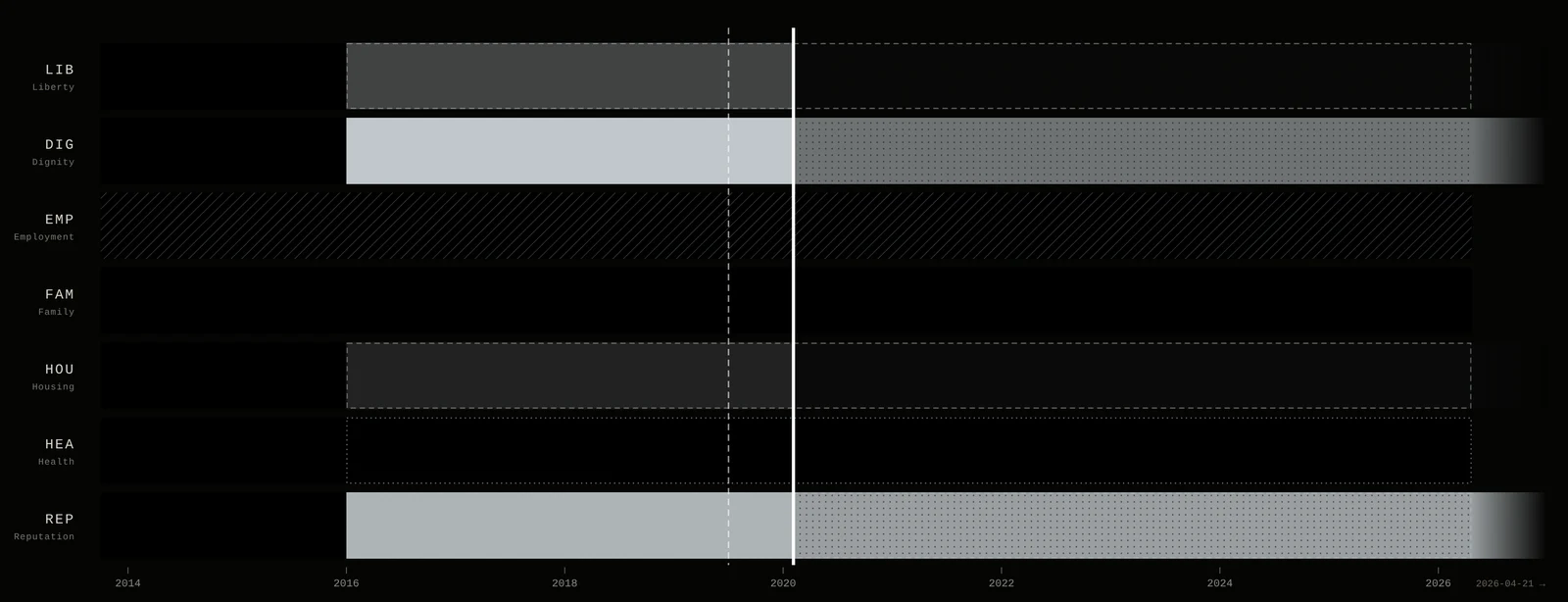
SyRI was used in four places between 2016 and 2019: Capelle aan den IJssel, Eindhoven, Haarlem, and the Rotterdam districts of Hillesluis and Bloemhof. At the court hearing the State acknowledged that it had only ever been applied in neighbourhoods officially labelled as problem districts, where incomes are low and many residents have a migration background. Residents were not told they were being scored.
What happened
A coalition of civil-society organisations and trade unions sued the State in 2018. In September 2019 the UN Special Rapporteur on extreme poverty submitted a brief to the court warning that the system targeted the poor. In July 2019 the mayor of Rotterdam stopped the local deployment after public pressure.
On 5 February 2020 the District Court of The Hague ruled that the law behind SyRI violated the right to private life under Article 8 of the European Convention on Human Rights. The court found the system too opaque to check, and said that risk profiles applied to selected neighbourhoods could discriminate by income and migration background. SyRI was stopped nationwide.
Data produced and shared through the system stayed in agency databases after the ruling. A related fraud list kept by the tax authority was later found unlawful by the Dutch Data Protection Authority, which fined the tax authority €3.7 million in 2022.
What the record shows
Dignity carries the heaviest documented harm (8 of 10): people were treated as suspects because of where they lived. Reputation follows (7), because records outlived the system. Liberty (2) and housing (1) show lighter harm. Employment is marked as insufficiently documented, and health as suspected but not measurable. No family harm is recorded.
The record contains no point of no remedy. The court stopped the system before any irreversible loss was documented.
Reading the plate
Horizontal lines inside the pupil mean a rule-based system. The bright, fine-grained iris means the case is very well documented. The sharp red ring means the causal chain is well established. The iris is drawn at national scale because the system was created by national law, though it was used street by street. The size of the red point follows the number of people affected, on a logarithmic scale.
Key sources
- Rechtbank Den Haag, ECLI:NL:RBDHA:2020:865 (Dutch) and ECLI:NL:RBDHA:2020:1878 (English), 5 February 2020
- Staatsblad 2013, 405: amendment to the Wet SUWI
- UN Special Rapporteur on extreme poverty and human rights, amicus curiae brief, September 2019
- Autoriteit Persoonsgegevens, investigation into the Fraude Signalering Voorziening, 29 October 2021, and fine, 2022
- Amnesty International, Xenophobic Machines, 14 October 2021
The complete record for this case, with every source, the claims matrix and the coded data, is published in the open catalogue The Witnessed Sentence.